Find Your Daily Voice
GO
Tag:
Astronomy
Stamford, CT
Your Community
Stamford Museum Sets First Star Party For Perseids Peak
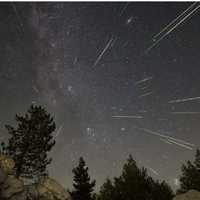
Stargazers will get a chance to watch the Perseids meteor shower during the Stamford Museum & Nature Center’s first Star Party at its new Planetarium & Astronomy Center. The all-ages event is scheduled for Wednesday, Aug. 12, from 8 to 10 p.m. According to the Stamford Museum & Nature Center’s website, the evening will begin with a Planetarium presentation explaining the science behind meteor showers and what makes the Perseids a highly anticipated annual skywatching event. Guests will then head outside for telescope observing and meteor watching, weather permitting. Visitors …
National Interest
Saturn’s Brightest Night, Fall Equinox Coming Back-To-Back
Two marquee celestial moments will headline late September, giving stargazers a bright planet to admire and a seasonal reset back on Earth. Forecasters say Saturn will hit its brightest night of the year on Sunday, Sept. 21, followed by the autumnal equinox at 2:19 p.m. Eastern Time on Monday, Sept. 22. Sunday, Sept. 21: Saturn At Opposition (Brightest Of 2025) At opposition, Earth sits directly between the Sun and Saturn, putting the ringed planet opposite the Sun in our sky. This is when Saturn appears at its closest, brightest, and largest for the year. Saturn will rise at sunset…
Berkeley Heights, NJ
Obituaries
Berkeley Heights Marine Vet, Dad, Lego Master Adam 'Bull' Bolewicz Dies At 52
Adam "Bull" Bolewicz, a Berkeley Heights native, died on Tuesday, Aug. 12 at the age of 52, according to his obituary from the Paul Ippolito Berkeley Memorial Funeral Home website. Born in Poland, Bolewicz immigrated to the United States, later spending 10 years serving in the United States Marine Corps and the United States Army, his obituary reads. Bolewicz was also an avid reader who loved English Premiere League soccer, Formula 1 racing, building LEGO, Stars Wars, astronomy and drawing, according to his obituary. Wczoraj w nocy zmarł mój przyjaciel, kolega i szwagier - Adam Bolew…
National Interest
Incoming Comet Could Be Alien Probe, Harvard Professor Says; Other Experts Aren't Buying It
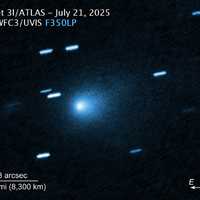
A cosmic visitor is stirring up an earthly debate. A Harvard University astrophysicist has suggested the incoming interstellar object 3I/ATLAS could be an alien probe. But NASA and most astronomers say it’s almost certainly a comet. 3I/ATLAS, also known as C/2025 N1, is an interstellar comet discovered by the Asteroid Terrestrial-impact Last Alert System station at Río Hurtado, Chile, on Tuesday, July 1. 3I/ATLAS is the third known interstellar object to pass through our solar system, meaning it originated beyond it. The prevailing view classifies it as a comet: an icy body th…
National Interest
Double Celestial Treat: Venus Meets Jupiter, Meteor Showers Follow Hours Later
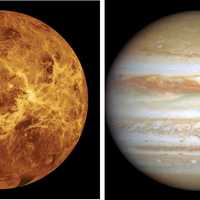
Skywatchers are in for a two-part cosmic spectacle: a rare Venus-Jupiter pairing followed by the peak of the Perseid meteor shower. Tuesday, Aug. 12 will dawn with brilliant Venus sidling up to mighty Jupiter in the eastern twilight, and by nightfall the year’s most dependable meteor show will be streaking overhead. The planetary rendezvous starts around 4 a.m. local time when Venus, the brightest beacon in the sky, slides to within less than one degree of Jupiter. Hold a pinky finger at arm’s length and you will cover the gap. The duo rises higher through dawn and repeats almo…
National Interest
Full Moon, Planet Pairing, Meteor Showers Coming: Here's When To Keep An Eye On The Sky
The night sky is about to deliver a rapid-fire series of spectacles, giving stargazers three reasons to look up over just five nights. With clear skies and a little planning, sky-watchers can capture all three events. No special equipment is required. Sturgeon Moon The final full moon of meteorological summer rises Friday evening, Aug. 8, and glows all night into Saturday, Aug. 9. August’s moon is best known as the Sturgeon Moon, but Indigenous peoples also call it the Black Cherry Moon, Ricing Moon and Mountain Shadows Moon, according to AccuWeather. Watch it climb the south…
National Interest
Super Sturgeon Moon Will Rise With Biggest, Brightest Glow Of Summer: Here's Timing
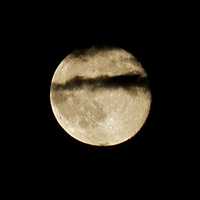
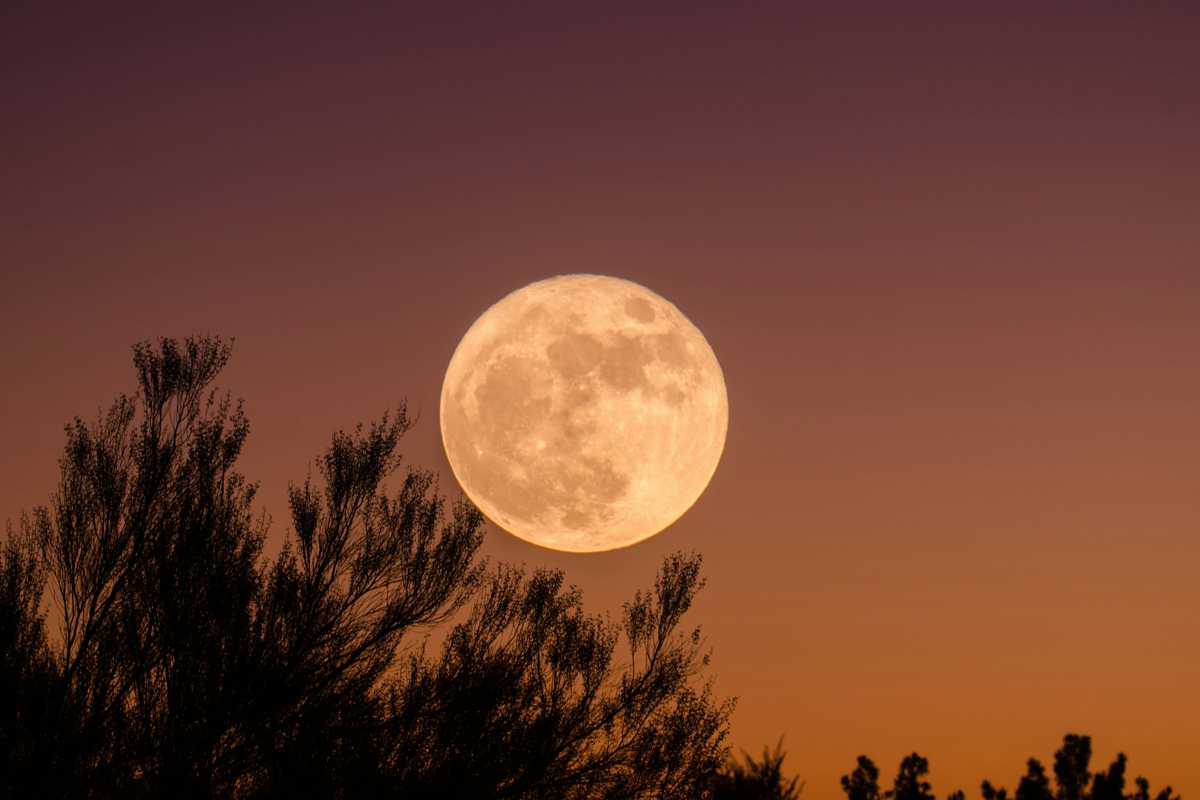
The Full Sturgeon Moon is about to crest the eastern horizon swelling into one of 2025’s brightest and largest supermoons. Unlike an ordinary full moon, a supermoon occurs when our satellite reaches or nears perigee — its closest orbital point to Earth — making it appear up to 14 percent larger and 30 percent brighter than when it hangs at apogee. This month’s lunar show peaks precisely at 3:55 a.m. EDT on Saturday, Aug. 9, but astronomers say the moon will seem full and strikingly luminous from Thursday evening, Aug. 7 through early Monday, Aug. 11. Why “Sturgeon”? The August full m…
National Interest
Viral Claims 'World Will Go Dark' Aug. 2 Debunked, But 'Eclipse Of Century' On Horizon
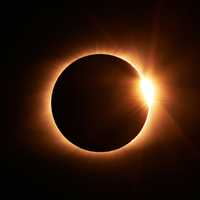
Rumors racing around social media claim the world is plunging into darkness next month, promising six eerie minutes of blackout on Saturday, Aug. 2. Spoiler alert: it's not true. Despite viral online chatter, astronomers confirm there’s no solar eclipse scheduled for Aug. 2, 2025. The confusion, experts say, comes from anticipation for an extraordinary astronomical event — the genuine "eclipse of the century" — that's still two years away. Mark your calendars for Aug. 2, 2027, when a rare total solar eclipse will indeed plunge parts of the globe into dramatic darkness for an impressive six …
National Interest
Night Skies To Sparkle As Meteor Showers Peak: Here’s Timing
Stargazers are in for a rare treat at month’s end, when two separate meteor showers each peak activity on the same night, promising a combined rate of up to 30 “shooting stars” an hour. According to the American Meteor Society, some of those streaks could blaze across the sky as brilliant fireballs, outshining everything but the Moon and brightest planets The dual peak — Southern Delta Aquariids and Alpha Capricornids — will unfold from the evening of Tuesday, July 29, through the pre-dawn hours of Wednesday, July 30. The spectacle will give observers across the Northern Hemisphere a fron…
National Interest
'Largest Piece Of Mars On Earth' Sells For $5.3M At NYC Auction
A massive meteorite called the "largest piece of Mars on Earth" was sold for millions of dollars at a New York City auction. A bidder won the 55-pound space rock for $5,296,000 on Wednesday, July 16, according to Sotheby's. The "Red Planet" relic measures more than 14 inches and is about 70% larger than the next biggest Martian meteorite ever found on Earth. Sotheby's said a large asteroid strike ejected the rock from Mars and traveled 140 million miles through space. On Thursday, Nov. 16, 2023, the meteorite slammed into the Sahara Desert, crash-landing in Niger's remote Agadez R…
National Interest
Universe's Secrets Revealed In Stunning Images From Powerful New Telescope
They’ve turned on the sky. That’s the effect of the first images unveiled from the Vera C. Rubin Observatory — a next-generation deep-space facility perched high atop Cerro Pachón in Chile. The observatory, funded by the National Science Foundation and the US Department of Energy’s Office of Science, released its inaugural imagery Monday, June 23, showcasing stars, galaxies, and cosmic phenomena on a jaw-dropping scale. In just over 10 hours of test observations, the observatory captured millions of galaxies, thousands of asteroids, and a staggering sweep of the Milky Way. But this i…
Shelton, CT
Readers' Choice
Best Date Night Activity In Fairfield County In 2024: Aquila's Nest Vineyards
We are thrilled to announce that Aquila's Nest Vineyards has been named Best Date Night Activity in Fairfield County in the 2024 Daily Voice Readers' Choice Awards! According to its website, Aquila's Nest Vineyards is a family-owned winery and event venue that offers a unique and immersive experience inspired by mythology and astronomy providing a romantic setting with its scenic views, beautifully designed outdoor spaces, and an inviting atmosphere. Guests can enjoy locally crafted wines while relaxing in thoughtfully curated seating areas, making every visit a special occasion, per its we…
National Interest
Best Viewing Chances Coming In 'Parade Of Planets': Here's When To Keep Eye On Sky
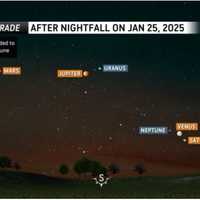
Skywatchers, get ready for an unforgettable weeks-long celestial spectacle. This rare phenomenon, nicknamed the "Parade of Planets," offers a unique opportunity for viewers to observe multiple planets in the night sky. What to Expect Shortly after sunset through mid-February, the six planets -- Jupiter, Mars, Neptune, Saturn, Uranus, and Venus -- will align across the night sky. "Venus, Saturn and Neptune will be bunched together low in the southwestern sky, while Mars, with its distinct reddish hue, Jupiter and Uranus will glow higher in the southern sky," according to AccuWea…
National Interest
Parade Of Planets: Rare Celestial Lineup Set To Dazzle Night Skies
A rare celestial phenomenon is about to light up the heavens, offering skywatchers a chance to marvel at the dynamic beauty of our Solar System. This February, a "Parade of Planets" will see all seven of Earth’s planetary neighbors align in a dazzling display. The main event occurs on Friday, Feb. 28, when Saturn, Mercury, Neptune, Venus, Uranus, Jupiter, and Mars will appear in the night sky at the same time. Stretching in a neat row along the ecliptic, this alignment promises to be a feast for the eyes, with bright Venus and Jupiter taking center stage while the fainter Neptu…
National Interest
Rare Comet Could Shine As Bright As Venus: Here’s When You Can See It
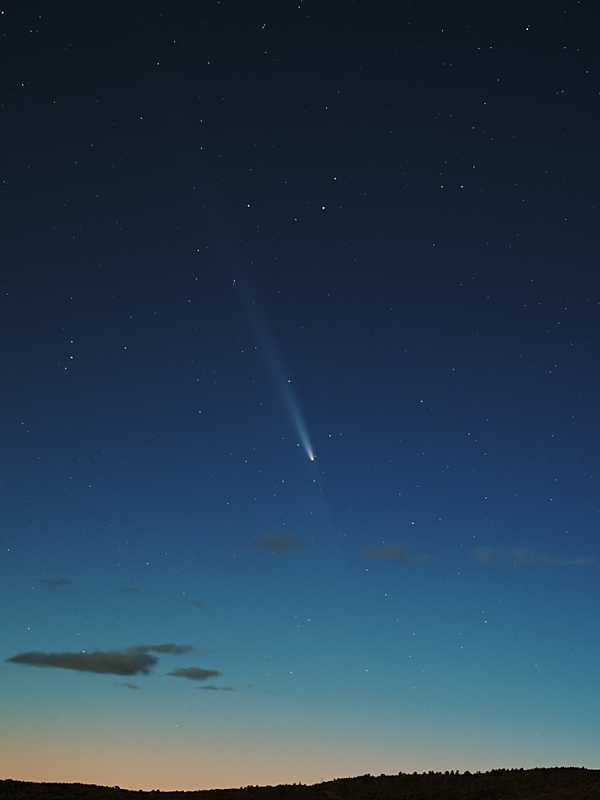
A celestial event 160,000 years in the making will grace the night sky this week, as Comet C/2024 G3 (ATLAS) makes its rare appearance. Expected to be the brightest comet in nearly 20 years, it could shine as brightly as the planet Venus, offering a spectacular sight for skywatchers. Until now, the comet has only been visible in the Southern Hemisphere. However, stargazers in the Northern Hemisphere, including those in the US and Europe, will get their chance to view it as it travels back toward the Sun. The best time to catch a glimpse of the comet is around half an hour before sunr…
Harrisburg, PA
Your Community
Leonid Meteor Shower To Peak Over Pennsylvania Skies
Stargazers in Pennsylvania are in for a celestial treat as the Leonid meteor shower lights up the night sky, EarthSky reports. The annual meteor display is expected to peak late tonight, Saturday, Nov. 18, into the early hours of Sunday, Nov. 19, with optimal viewing conditions away from city lights. Known for producing some of the most dramatic meteor storms in history, the Leonids typically generate 10 to 15 meteors per hour during peak activity. This year, however, viewers might witness an even higher count under clear skies. The meteors are fragments from the comet Tempel-Tuttle, which o…
Fairfield, CT
Breaking News
The Beaver Moon — Last Supermoon of 2024 — Will Dazzle Skywatchers Soon: Here's When To Look Up
Local skywatchers, mark your calendars. The final supermoon of 2024 — known as the Beaver Moon — will light up the night sky this week. The moon will reach peak brightness at 4:29 p.m. EST on Friday, Nov. 15, and promises to be one of the brightest nighttime displays of the year, according to USA Today. Related: Fireball Lights Up East Coast Sky, Captivating Thousands Click here to find out exactly when the moon will be at its most encouraging where you live. A supermoon occurs when the moon is full and closest to the Earth in its orbit, according to N…
Greenwich, CT
Breaking News
Once-In
-a-l
ifetime Celestial Event Has Skywatchers In Awe
Stargazers are being treated to a once-in-a-lifetime event this month — make that 1,000 lifetimes. Comet Tsuchinshan-ATLAS made a guest appearance in the night sky as it came within 44 million miles of our homeworld last week, and it is dazzling astronomers and novice skywatchers alike. Stargazers got their best view of the comet on Tuesday, Oct. 15, but it will remain visible with the unaided eye through the end of the month as it rises higher and higher in the night sky until it is gone, according to NASA. The comet won't make another pass of Earth for another 80,…
National Interest
'Once In Lifetime' Comet Will Be Visible To Naked Eye In Night Sky: Here's When To Watch
You'll want to keep an eye on the sky in the coming days and weeks. A newly discovered comet is about to make its closest pass by Earth later in the week and is expected to be visible through the end of October. Comet Tsuchinshan-ATLAS, or C/2023 A3, which was first identified last year, is expected to be especially vivid, and its brightness could even compare to Jupiter, according to The New York Times. The comet will be closest to earth -- about 44 million miles, mind you -- on Saturday, Oct. 12, according to NASA. “This one is, I would say, a once-in-a-lifetime opportunity,” said astro…
National Interest
Blue Supermoon: What You Need To Know About Rare Lunar Event
There's an out-of-this-world lunar event set to begin this week. From Monday, Aug. 19, through Wednesday, Aug. 21, the moon will appear bigger and brighter in the night sky than normal. It's called the supermoon. It's the first one of the year, but that's not why this one is special. A supermoon occurs when the moon is full and closest to Earth in its orbit, according to NASA. That closeness makes the rocky satellite appear 15 percent bigger and 30 percent brighter. What makes August's supermoon so unique is that it's a blue moon. No, the light of the moon won't change co…
National Interest
Here's When To Watch Most Popular Meteor Show Of Year
The best meteor shower of the year is about to peak. The Perseid meteor shower, marked by swift and bright streaks, frequently leaves long "wakes" of light and color behind as it moves through Earth's atmosphere, according to NASA. The most significant activity is expected to occur on the night of Sunday, Aug. 11, into the early morning hours of Monday, Aug. 12, and possibly Tuesday, Aug. 13. Perseids are best viewed in the Northern Hemisphere during the pre-dawn hours, though meteors from this shower can be seen as early as 10 p.m. NASA says. EarthSky.com says that "the best t…
Lower Paxton, PA
Breaking News
'Most Visible Eclipse For US In 100 Years:' PA City Ranked Among Best Places For Viewing
In just over a month, what's being called the astronomy event of the decade will occur when a total solar eclipse will cross North America, passing over Mexico, the United States, and Canada. And one Pennsylvania city has been named among the top 20 best places in the U.S. for viewing. A total solar eclipse happens when the moon passes between the sun and earth, completely blocking the face of the sun and the sky will darken as if it were dawn or dusk. Many are planning road trips to places where the best viewing conditions are expected for what space.com says will be "the l…
Massapequa, NY
Breaking News
'Most Visible Eclipse For US In 100 Years' Coming Soon: First Projected Cloud Cover Conditions
In just over a month, what's being called the astronomy event of the decade will occur when a total solar eclipse will cross North America, passing over Mexico, the United States, and Canada. A total solar eclipse happens when the moon passes between the sun and earth, completely blocking the face of the sun and the sky will darken as if it were dawn or dusk. Many are planning road trips to places where the best viewing conditions are expected for what space.com says will be "the longest and most visible for the US in 100 years," with a four-minute totality duration beginning…
Massapequa, NY
Breaking News
These Places Will Be Best To View 'Most Visible Eclipse For US In 100 Years': Here's When
It won't be long now. In just over two months, what's being called the astronomy event of the decade will occur when a total solar eclipse will cross North America, passing over Mexico, the United States, and Canada. Mark your calendar now for Monday, April 8 with four-minute totality duration beginning at 3:13 p.m. Eastern time. A total solar eclipse happens when the moon passes between the sun and earth, completely blocking the face of the sun and the sky will darken as if it were dawn or dusk. According to space.com, it will be "the longest and most visible for the US in 100 years," w…
Chappaqua, NY
Obituaries
Chappaqua Native Peter Charles Neale Was An Avid Reader, Traveler, And A Man Of Deep Faith
Born July 3, 1956, in Westchester County, Peter Charles Neale died unexpectedly but peacefully at his home in Lewisburg, WV on Oct. 29, 2023. He was the son of Richard Lewis Neale and Claudia Garesché Neale of Chappaqua, where he grew up amongst a large family of siblings and cousins. Peter earned his Bachelor of Science degree from Iona College in New Rochelle. After working many years as a house painter, he began to travel across the U.S. and to pursue his deep interests in world history, music, comparative religion, and American life. Over th…
York, PA
Your Community
Best York County Parks To Visit This Spring
Can warm, spring weather be here to stay? Then it’s definitely time to plan your visits to parks in York County. Located in southern York County, Codorus State Park offer thousands of acres of natural beauty. Amenities and activities available include boating, camping, hiking, swimming, playgrounds, picnic areas, and more. Its biggest attraction is Lake Marburg. The lake's 26 miles of shoreline make it perfect for fishing or just taking a leisurely boat ride. John C. Rudy County Park in York offers a sand volleyball court, softball and soccer fields, horseshoe pits, and trails for runni…
White Plains, NY
Breaking News
Here's Where To Look: Green Comet Will Appear In Night Sky For First Time In 50,000 Years
A rare comet last seen 50,000 years ago during the Stone Age is set to make an appearance and NASA is providing new guidance on where in the night sky you should look -- and when. Comet C/2022 E3 (ZTF), known as the "green comet," was discovered by astronomers in early March of 2022 inside the orbit of Jupiter. It will pass closest to Earth on Wednesday, Feb. 1, and Thursday, Feb. 2 "With binoculars and clear skies, you may spot C/2022 E3 (ZTF) near the Big Dipper," NASA said in a tweet on Wednesday. A #comet that hasn't been in our cosmic neighborhood in 50,000 years is making its cl…
Hamilton Township, NJ
Breaking News
Best Chance To See Jupiter In 59 Years
If you've never seen Jupiter, you'll get your best chance in 59 years tonight, officials say. With a good set of binoculars, the giant planet should be the second brightest image in the sky after the moon for several nights, NASA said on its blog. Stargazers can expect excellent views of Jupiter the entire night of Monday, Sept. 26 when the giant planet reaches opposition, NASA said. From the viewpoint of Earth’s surface, opposition happens when an astronomical object rises in the east as the Sun sets in the west, placing the object and the Sun on opposite sides of Earth. Jupiter’s opposi…
Newark, NJ
Your Community
Look
Inside
: Buzz Aldrin's $1M Montclair Home May Have Pending Offer
The Montclair home where former NASA astronaut Buzz Aldrin was born and raised is on the market for just more than $1 million. The home had a pending offer Wednesday morning, according to the Zillow listing. Daily Voice was not immediately able to reach listing agents. The Princeton Place home has seven bedrooms, four bathrooms and is 3,169 square feet. Built in 1907, the home boasts a large living room and fire place, and a formal dining room with 19-foot ceilings. Despite the apparent offer, another Montclair man is proposing the home be preserved as a non-profit namesake…
Worcester, MA
Breaking News
Leonardo DiCaprio, Jennifer Lawrence Reportedly In Worcester Shooting A Film
A-List stars can be spotted in Worcester as filming for a new Netflix movie gets underway. On Friday, Dec. 4, film crews set up at the base of the Mercantile Center to shoot scenes for a romantic drama set to debut on the streaming service starring Leonardo DiCaprio and Jennifer Lawrence, according to the Worcester Telegram and Gazette. The movie is called “Don’t Look Up” and is being filmed in Worcester as well as Boston and other locations in Massachusetts. Some scenes will be shot at the DCU Center. Lawrence and DiCaprio play star-crossed lovers who also happen to be astronomers that …
Worcester, MA
Breaking News
Leonardo DiCaprio, Jennifer Lawrence Reportedly In Worcester Shooting A Film
A-List actors can be spotted in Worcester as filming for a new Netflix movie gets underway. On Friday, Dec. 4, film crews set up at the base of the Mercantile Center to shoot scenes for a romantic drama set to debut on the streaming service starring Leonardo DiCaprio and Jennifer Lawrence, according to the Worcester Telegram and Gazette. The movie is called “Don’t Look Up” and is being filmed in Worcester as well as Boston and other locations in Massachusetts. Some scenes will be shot at the DCU Center. Lawrence and DiCaprio play star-crossed lovers who also happen to be astronomers that…
Next Page
Archive